Specification:
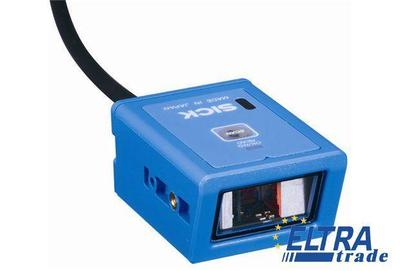
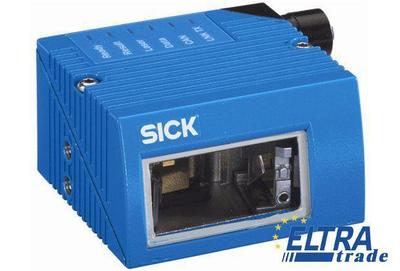
| Part Number: 1041987 |
| Serial interfaces (RS-232, RS-422/485) support Host and AUX modes. The AUX mode is limited to RS-232. The device features 3 switching inputs. Two of these inputs can be used via an optional parameter storage (CMC600) in CDB620/CDM420. Configuration is performed using SOPAS ET software. The print ratio is between 2:1 and 3:1. The device is protected against ambient light up to 2,000 lx on the barcode. Vibration resistance meets EN 60068-2-6 (1995) standards. Ethernet connectivity supports Host and AUX functions. The device can read 1 to 50 codes per reading interval, automatically discriminating between them. The light source is a visible red laser with a wavelength of 655 nm. Electrical connection is via two M12 connectors: a 12-pin male connector and a 4-pin female connector, both on a swivel. PROFIBUS DP connectivity is optional and requires an external connection module (CDF600-2). The front screen is made of glass. Scanning frequency ranges from 400 Hz to 1,200 Hz. Ethernet data transmission rate is 10/100 Mbit. The ambient operating temperature is between 0 °C and +40 °C. The device has 2 control buttons for selecting and starting/stop functions. The angle of deflection ranges from -20° to +20°. The reading field uses an oscillating mirror. Operating voltage is from 18 V DC to 30 V DC. PROFIBUS DP is supported. CAN bus data transmission rate ranges from 20 kbit/s to 1 Mbit/s. Oscillation frequency is between 0.5 Hz and 6.25 Hz. CAN bus connectivity is supported. The number of codes per scan is 1 to 20 for the standard decoder and 1 to 6 for the SMART decoder. Heating is optional. The number of characters per reading interval is 5,000, or 500 for the multiplexer function in CAN operation. Reading distance varies from 78 mm to 397 mm. Ethernet connectivity is supported. Acoustic indicators include a beeper/buzzer that can be switched off and assigned as a result indication function. The reading pulse can be set to Auto pulse, CAN, Non-powered, «Sensor 1» switching input, or Serial interface. The housing is made of die-cast aluminum. Shock resistance meets EN 60068-2-27 (1993) standards. The scanner design is a line scanner. The field of view is up to 50°. Permissible relative humidity is 90% (non-condensing). DeviceNet connectivity is optional via an external connection module (CDM + CMF). The bar code print contrast (PCS) must be ≥ 60%. There are 2 switching outputs, usable via CMC600 in CDB620/CDM420. Code resolution ranges from 0.25 mm to 0.5 mm. Serial interfaces (RS-232, RS-422/485) are supported. The protocol for CAN bus includes CANopen and CSN (SICK CAN Sensor Network). The housing color is light blue (RAL 5012). A MicroSD memory card (512 MB) is optional. DeviceNet connectivity is supported. Data transmission rate for serial interfaces (RS-232, RS-422/485) ranges from 2,400 Baud to 115 kBaud, with AUX at 57.6 kBaud. Power consumption is 6 W. Dimensions are 95 mm x 96 mm x 41 mm. Connection type is Ethernet. Optical indicators include 6 LEDs (Ready, Result, laser, Data, CAN, LNK TX) and a bar graph with 10 LEDs for displaying reading rate percentage. Oscillating mirror functions include fixed (adjustable position), one shot, and oscillating (variable or fixed amplitude). Electromagnetic compatibility (EMC) meets EN 61000-6-3 (2001-10) / EN 61000-6-2:2005 standards. Weight is 350 g, excluding the connecting cable. MTBF is 40,000 hours. Storage temperature ranges from -20 °C to +70 °C. The number of multiple readings is from 1 to 99. Focus is fixed. The enclosure rating is IP 65 (EN 60529). Laser class is 2 (EN 60825-1 (A2:2001-03)). Protection class is III (EN 61140). The function for CAN bus includes SICK CAN sensor network (Master/Slave, Multiplexer/Server). The version is Mid Range. Ethernet protocols include TCP/IP, EtherNet/IP, PROFINET, PROFINET Dual Port (optional via CDF600-2), and EtherCAT (optional via CDF600). Supported barcode types are Interleaved 2 of 5, All current code types, Codabar, Code 128, Code 39, Code 93, GS1 DataBar, GS1-128 / EAN 128, MSI/Plessey, Pharmacode, Telepen, UPC / GTIN / EAN. |